
There is a certain kind of designer who cannot help themselves. For whom the finished object is never quite finished — not until it contains a small, private truth that only the curious will ever find. Henrik Fisker is exactly that kind of designer.
The Fisker Ocean, the California-born electric SUV that bore his name, was already a statement vehicle before anyone opened a door. Solar roof. Recycled interiors. A vegan materials story told through every panel. But Fisker went further than the spec sheet. He hid the ocean inside his car named for it — and left an easter egg hunt for anyone paying close enough attention.
“The name wasn’t just marketing. It was a design brief.”
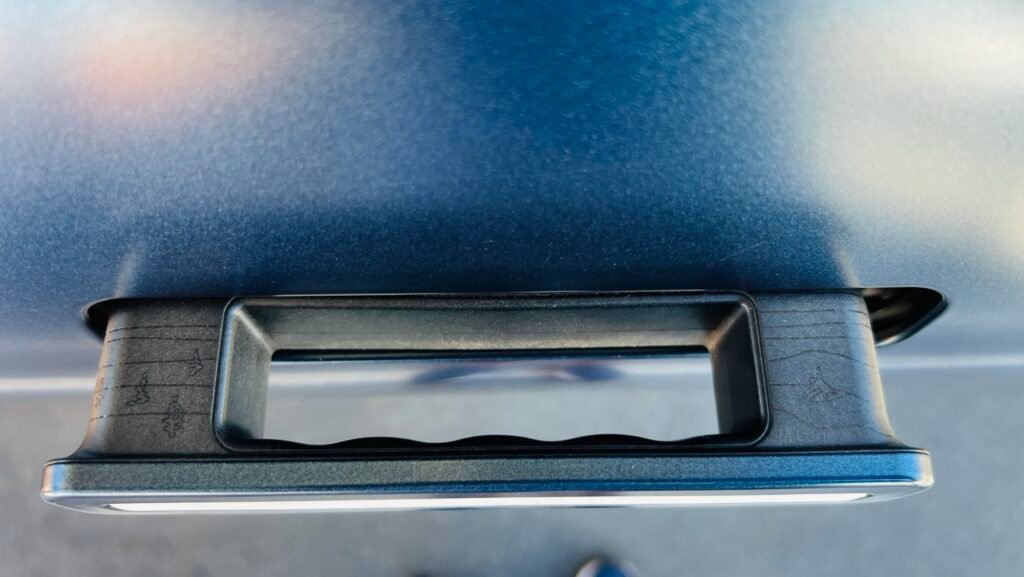
Look closer at the interior door handle stalks — those slim architectural fingers that invite you to pull the door shut — and you’ll find tiny surfers riding them. Not decals. Not afterthoughts. Molded into the plastic itself, as if they’d always been there, frozen mid-ride. It is exactly the kind of detail that makes a car feel authored rather than assembled. And it makes you wonder, did the stalks approach come first, and he just seized the opportunity to add some fun? Or did he forego the more classic lever handle, just so he could hide his little friends here. Well, if you know of Henrik, you know it’s more the latter.
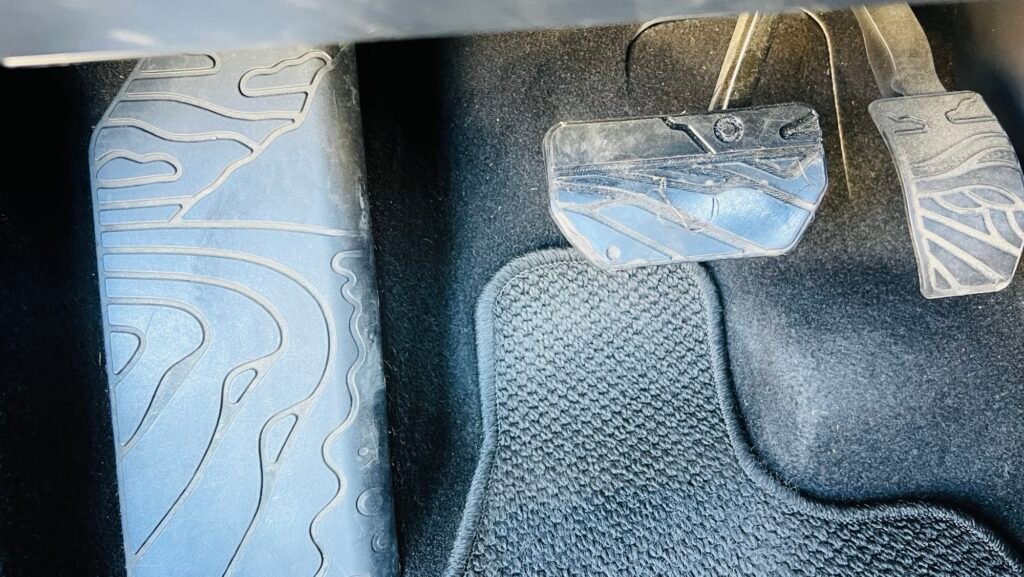
The ocean is not always gentle. On the driver’s side footwell, a wave pattern rolls across the floor — the same form language reappears on the brake pedal and the accelerator. Every press of the throttle, every modulation of speed, passes through the image of a wave. It’s an elegant piece of thematic compression: you are not just driving, you are surfing the road.
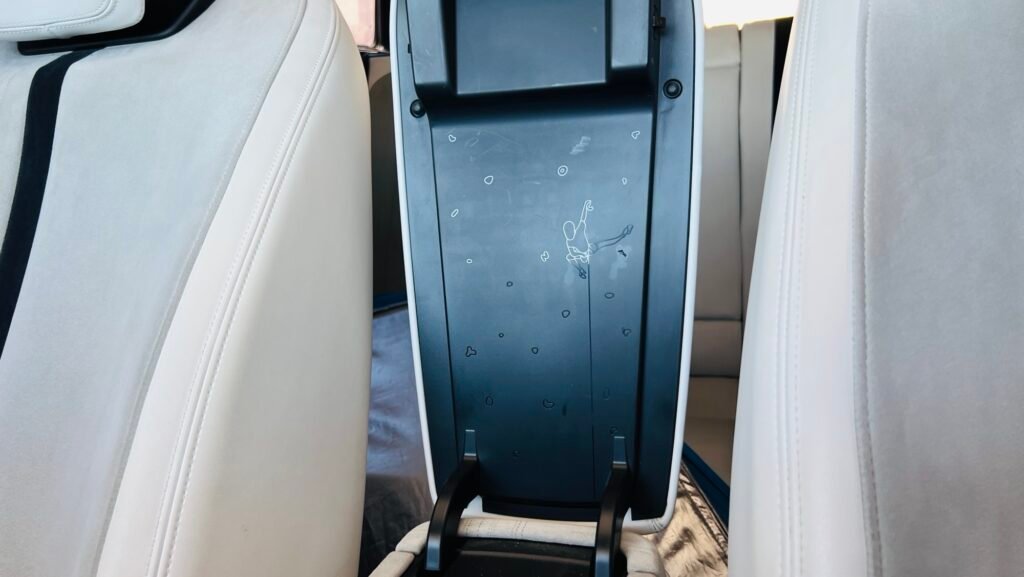
There is one detail, though, that belongs to a different register of the ocean’s story — and it might be the most unexpected of all. Hidden on the bottom side of the center console lid is a rock wall climber. It is the lone landlubber in a car otherwise fluent in water, and that is precisely the point. The ocean shapes the coast, and the coast shapes the people who live on it. Climbers, surfers, hikers — the California outdoor life is plural. Fisker understood that a car named for the ocean need not be enslaved to it.
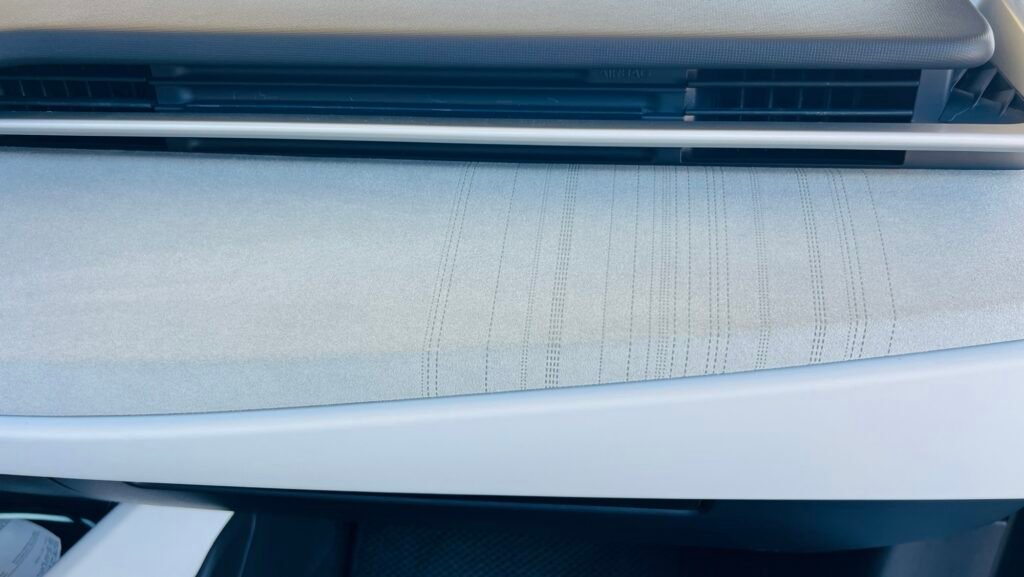
And the hunt continues. But some eggs are in plain sight, but so subliminal, you still don’t know what you’re looking at. On the passenger side, what might look like abstract texture on the dashboard, under scrutiny, resolves into raindrops. The same motif appears on the front seats. Rain falling on water — the ocean receiving the sky. It is quieter than the wave pattern, more ambient, like background music rather than a riff. Together, rain and wave create a weather system inside the cabin.
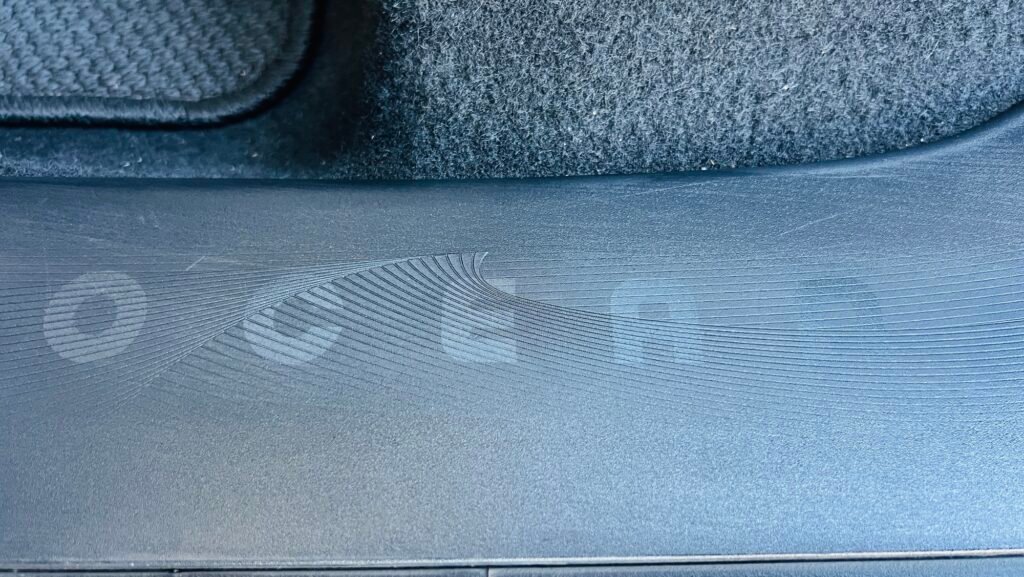
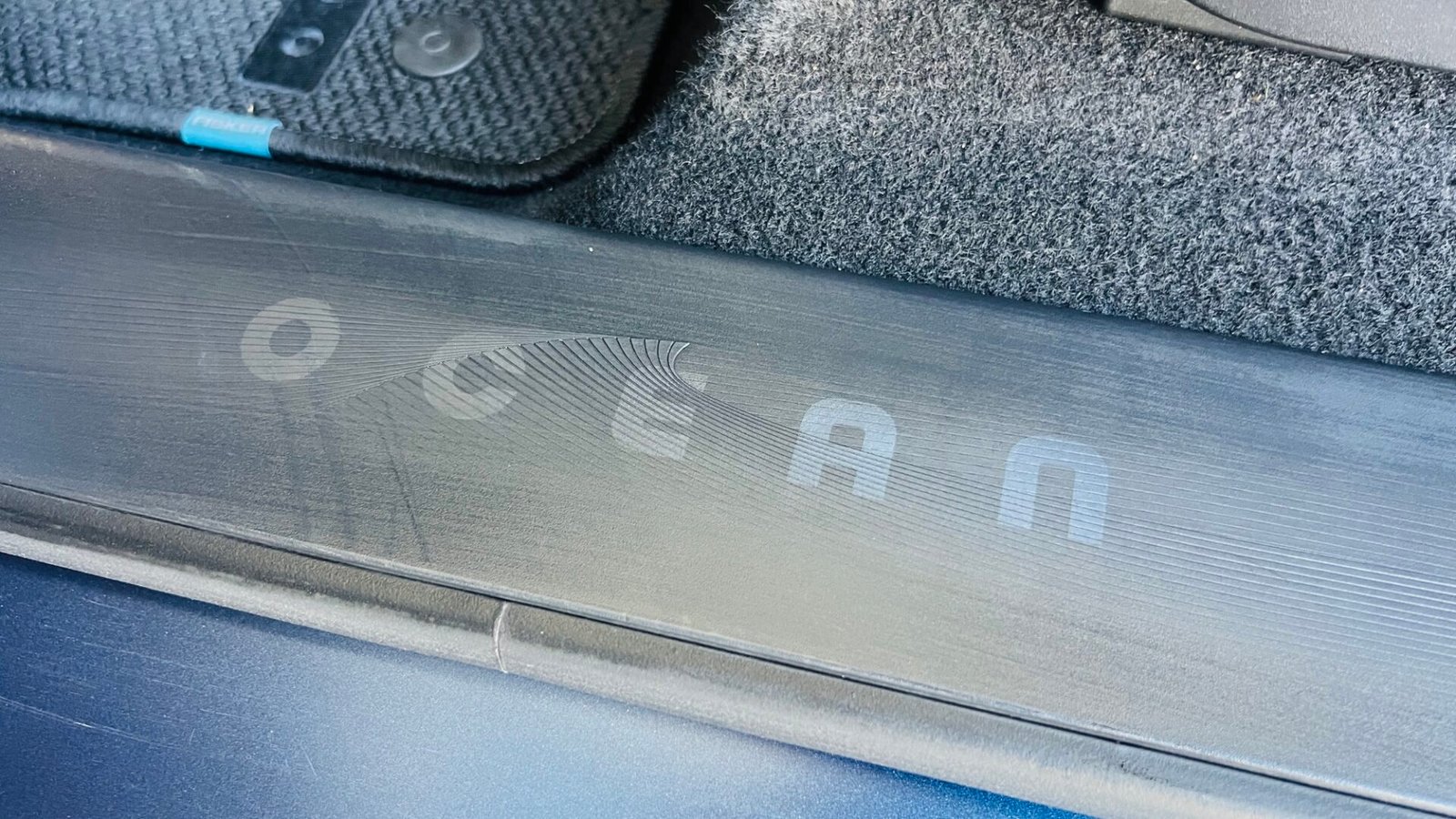
And then there is the nameplate itself, set into the door seam: the word Ocean, with a wave designed directly into the letterforms. The logo is the easter egg. The name contains its own meaning, literally, in the shape of its letters. It is the kind of circularity that good design achieves when a concept has been fully inhabited rather than merely applied.
To find these details is to understand that someone cared — deeply, specifically, stubbornly — about the experience of living with this car.
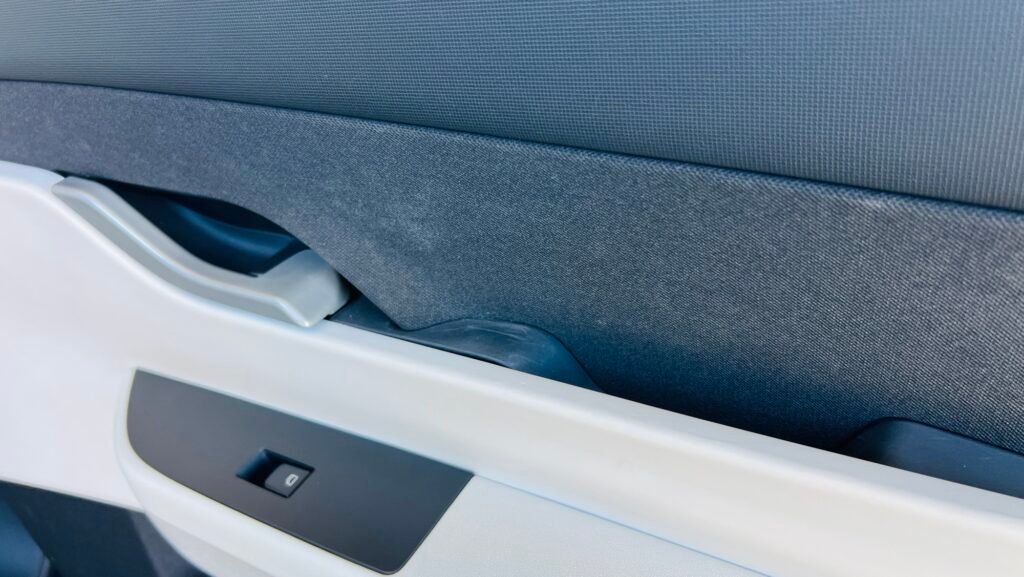
And finally, the last egg in the hunt: The entire interior cabin. Once you realize these little private notes around the car, you realize everything in the car has a swoosh or wave reflection to it. Nothing here is squared off. And nothing is round. Everything is fluid, flowing. Event the door handles, even the door grabs; all are ebbing and flowing. Look down at the door grab, the curved out space to pull the door shut, and now, you realize its a wave flow as well. Not bulging handle for tiny fingers. Just a flowing ripple effect from grab to handle.
Whatever complexities surrounded the Fisker Ocean’s commercial story, the design intent embedded in it remains untouched. These easter eggs are not marketing. They were never meant to be found in press releases or on spec sheets. They exist for the owner who runs a hand across the door handle one morning and suddenly notices the surfer. For the passenger who tilts their head and realizes the dashboard is raining. That moment of discovery — quiet, private, a little delighted — is the whole point. Henrik Fisker left the ocean everywhere. You just had to look.