
Six Month Review: What the Fisker Ocean Never Delivered
In the alternate timeline where the Fisker Ocean fulfilled its potential, it wasn’t just a car—it was a rolling showcase of “firsts.” But as of the Software 2.1 upgrade, the reality for owners is a bittersweet mix of what works and the echoing silence of what doesn’t. While version 2.1 finally stabilized the 12V battery issues and refined the key fob response, it also served as a stark reminder of the “innovation gap” left behind as the company faced its final chapters.
Here is the “Missing List”—the tech and promises that remained stuck in the digital waiting room.
The ADAS Vacuum: Adaptive Cruise and Beyond
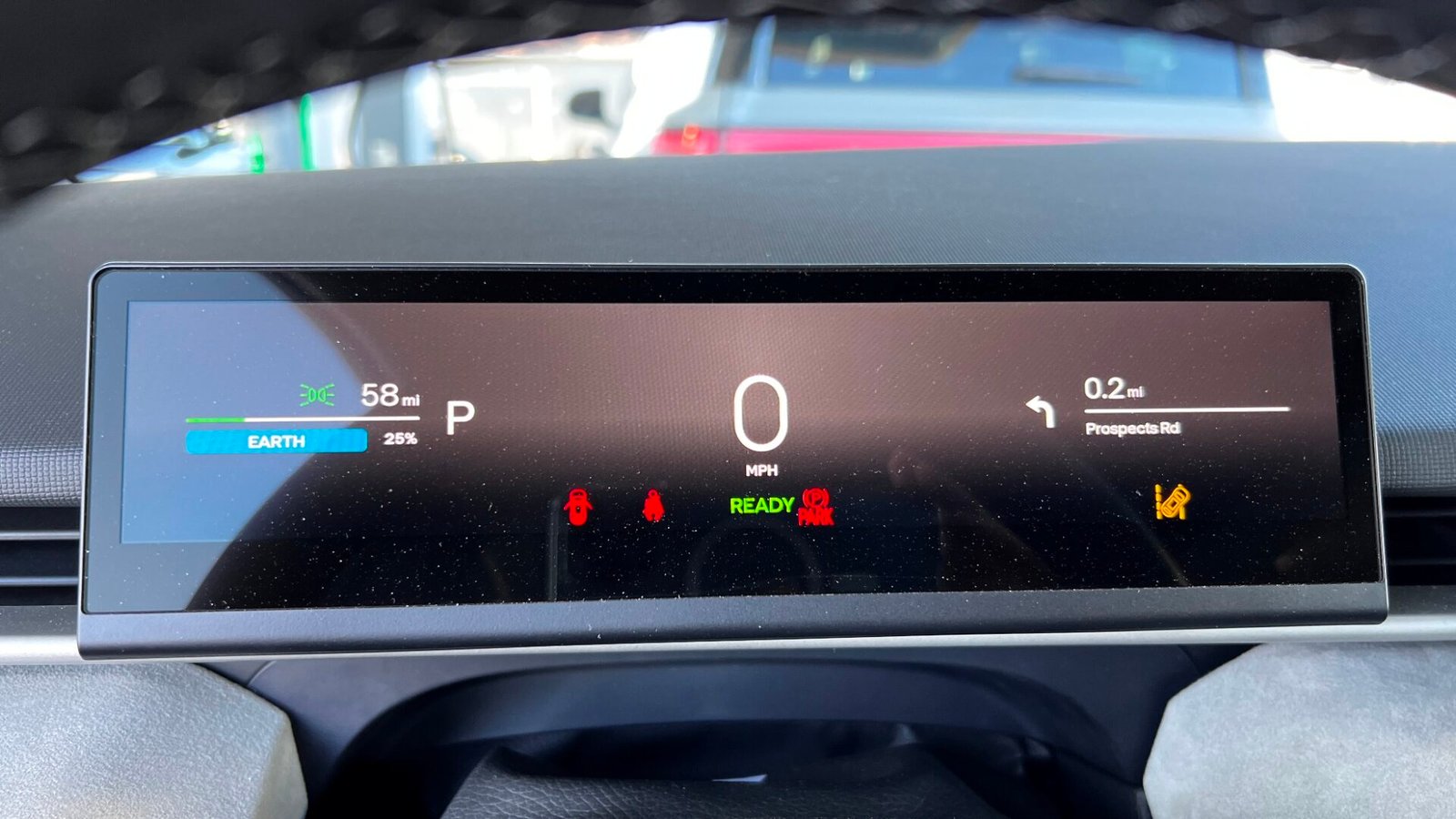
Perhaps the most glaring omission in a $72,000 “Ocean One” trim is the lack of functional Adaptive Cruise Control (ACC). Despite the hardware being present, version 2.1 still leaves drivers with basic, “dumb” cruise control. Although, the manual adaptive cruise control works pretty: You use your thumb to slide the dial up and down based on the car in front of you.
Otherwise, the promised suite of autonomy remains a skeleton:
- Lidar & 4D Radar: Fisker touted the world’s first 4D digital radar system. While the sensors are physically there, the sophisticated “Fisker Intelligent Pilot” features—like Lane Changing Assistance and Evasive Steering Assist—never made the jump from the brochure to the asphalt.
- Park My Car: The automated parking spot finder and self-parking tech remained “coming soon” until the end.
- Eye Monitoring & Control: While the A-pillar houses a driver-monitoring camera for drowsiness alerts, the high-tech promise of eye control for infotainment functions stayed in the realm of science fiction.
- Built-in Alexa: Integration was a headline feature, intended to control everything from climate to navigation via voice. As of 2.1, this remains largely non-functional or unoptimized.
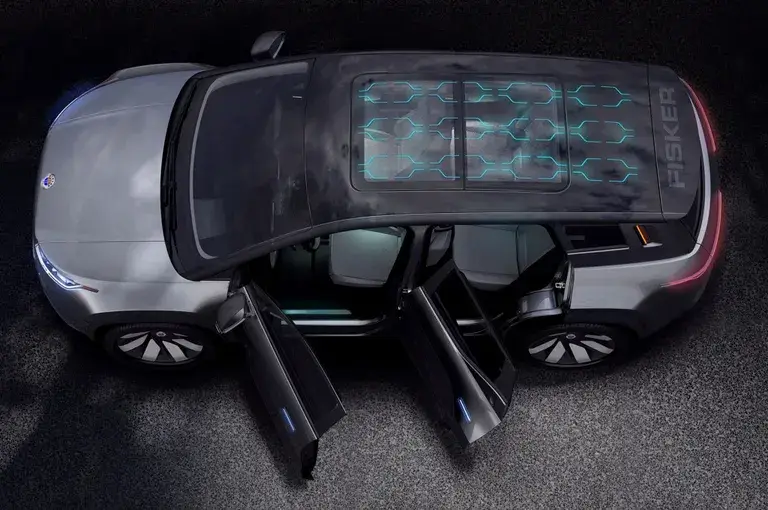
- 1,500 Miles of “Free” Sun: The SolarSky roof was marketed as capable of generating up to 1,500 miles of range per year (under ideal California sun). While the roof does provide a trickle charge to the high-voltage battery, the software to accurately track and maximize this “solar gain” was never fully realized, leaving the roof as more of a design statement than a power plant. This is a Henrik Fisker vanity design that he puts in all of his cars. I live in Palm Springs, and I park in the driveway. The best I get is 2-miles-per-day in the winter, and 5-miles-per-day at peak summer. Over one year, I only added 663 miles according to the Solar Sky monitor. See the chart here
- One-Pedal Driving: A staple of the EV experience, true one-pedal driving with a complete “hold” was repeatedly pushed back and was absent from the 2.1 rollout.
- Memory Seats: Even basic convenience features like saving your seat and mirror positions to a driver profile are still missing.
The Verdict
The Fisker Ocean 2.1 update was a “survival” patch—it fixed the errors that kept the car from being a reliable daily driver. But for the enthusiasts who bought into the vision of a Lidar-equipped, solar-powered, Alexa-integrated marvel, the Ocean remains a beautiful unfinished symphony. It is a testament to the fact that in the EV age, a car is only as good as the code that runs it.
And although American Leasing is promising to release software updates, those updates are software based, and most likely, unless help from China arrives, will never be able to fully ‘update’ the car hardware. The consensus is that we’ll never have ACC or full stop one-pedal drive. Oh well! Let’s see what the future holds.