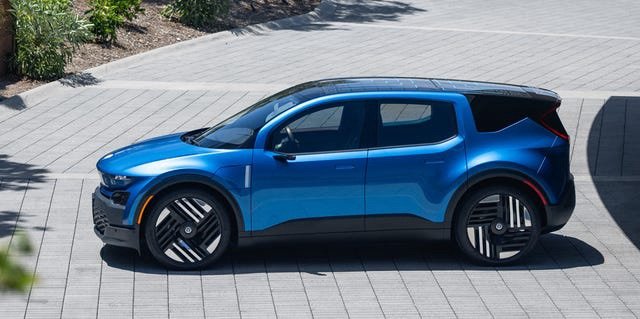

When Fisker shut down, we lost than just a car company, society lost a champion that aligned our values to their laws
There was a moment, not too long ago, when the electric vehicle revolution felt like it belonged to the dreamers, not just the accountants. We were on the verge of a world where a $30,000 EV wasn’t a compromise, and a pickup truck wasn’t just a tool, but a sustainable Swiss Army knife. That was the promise of the Fisker Pear and the Fisker Alaska.
Fisker stood at the cross roads where lawmakers keep demanding, um…extorting, that we are more efficient and sustainable, and then allow price gouging to continue filling the deep pockets of the global economy. California said “all cars must be electric by 2030.” That gave the industry about 9 years to crank out a totally new concept, not only in cars, but in car building as well. But with average EV car price of $60k, who could afford these cars? And for a state that constantly issues rolling blackout notices, then sues the Electric Company for billions, who was going to provide that energy?
Fisker was going to deliver that vision, a $30k car that could get us across town, across county and across the state, and back. And with innovative features we hadn’t seen in cars in decades, and with range that would allow us to bypass public charging and allow 99% of our charging at home.
But in our modern era of “engagement-first” critique, we let influencers with massive platforms and meddlers with short-term interests dismantle a vision before it could even clear the factory gates. We traded innovation for clicks, and in doing so, we lost two of the most exciting vehicles of the decade.
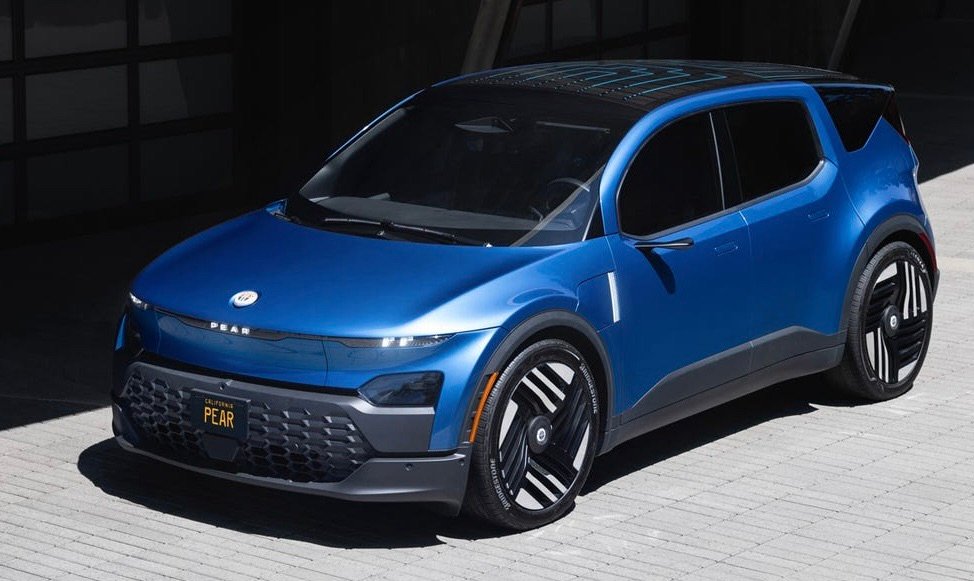
The Pear: A Personal Electric Automotive Revolution
The Pear wasn’t just another crossover; it was a total rethink of the urban car. Built on the lightweight SLV-1 platform with 35% fewer parts than its rivals, it was designed to be the “people’s EV.”
- The Price: A jaw-dropping $29,900 before incentives.
- The Stats: Two battery options offering 180 or 320 miles of range.
- The “Houdini” Trunk: A revolutionary rear hatch that slid down into the rear bumper, allowing you to load cargo in tight city garages where a traditional liftgate would hit the ceiling.
- The Froot: Not a “frunk,” but a literal insulated drawer that slid out from the front—perfect for keeping a pizza hot or gym clothes isolated.
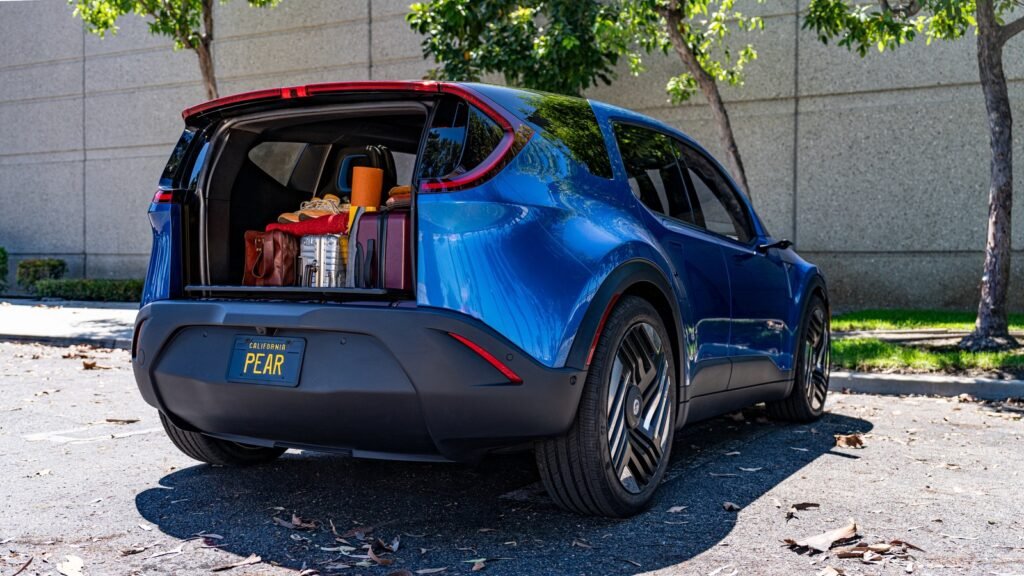
Imagine a city filled with these: 0-60 mph in 6.3 seconds, a six-passenger bench seat option, and a “Lounge Mode” where every seat folded flat to create a mobile sanctuary. Society could have had an accessible, stylish, and clever EV that didn’t require a six-figure salary.
Check out the Fisker Pear and Alaska’s original reveal
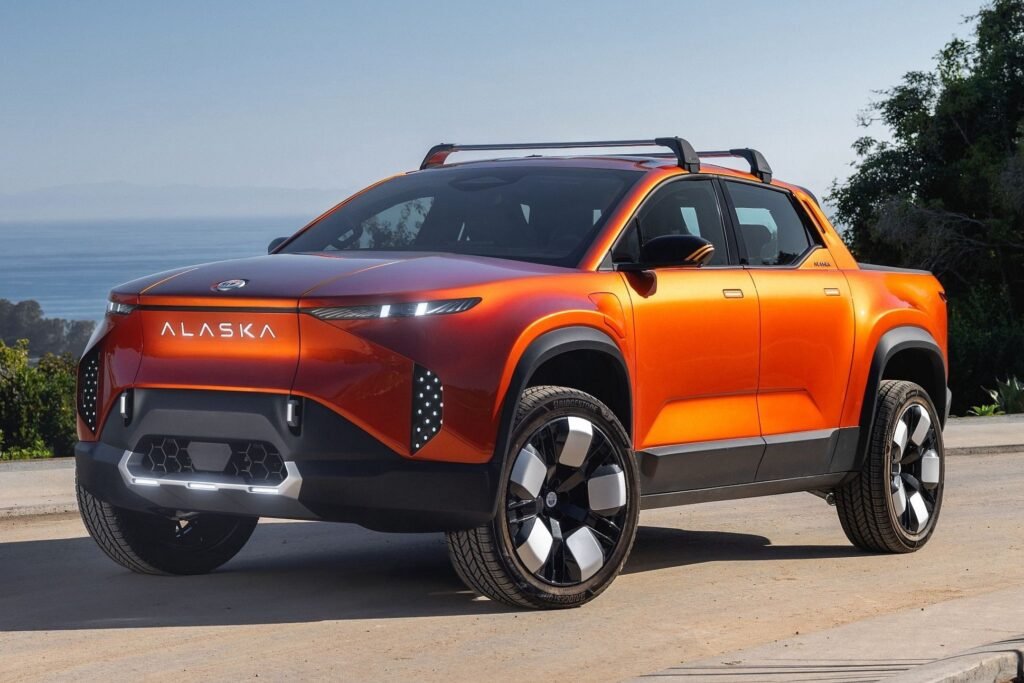
The Alaska: The Lightweight Workhorse
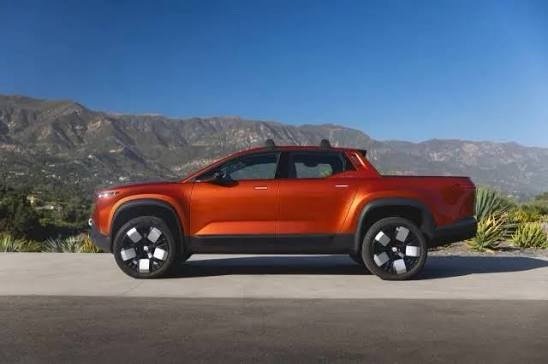
Then there was the Alaska. While other manufacturers were building 9,000-pound behemoths, Fisker was building the world’s most sustainable and lightest electric pickup.
- The Versatility: The “Houdini” made a return here as a power midgate. With the touch of a button, the bed expanded from 4.5 feet to 7.2 feet, and eventually 9.2 feet with the tailgate down.
- The Performance: A projected 0-60 mph in as little as 3.9 seconds.
- The Range: Up to 340 miles on a 113-kWh pack.
- The Quirks: It featured a dedicated cowboy hat holder and a “Big Gulp” cupholder—the largest in the world.
What We Lost
Instead of these machines, we have a graveyard of “what-ifs.” When influencers labeled the early software of the Ocean “the worst,” they didn’t just review a car; they pulled the rug out from under thousands of engineers and a vision for the Pear and Alaska. Their short-sighted reviews were often skewed towards what gets the most hits, and did not support the notion of software updates that not only could be pushed to the car, but were really irrelevant to the “car” and it’s mechanically capabilities. Even after the company folded, software updates continue. At the time of production release, most reviewers complained about:
- Lack of Hill Hold – automatic locking the brakes with the car comes to prevent the car from moving, for people with the inability to keep their foot on the brake
- No screen to display Solar Sky activity – because we couldn’t trust the odometer and range meters to validate that we were getting 5-6 miles per day of free solar panel charging. I guess no one thought to confirm the range display if you left the car sitting for a day.
- Bluetooth connectivity – Initial reviews said Bluetooth connection was spotty. OK. My Polestar disconnected my phone all time, it’s just the way it works. Between spotty cell reception and defective phone actions, who knows why it happens, but it does.
- But my favorite was one reviewer who said, “The car kept trying to connect to another phone.” I don’t believe, and have never seen a car “trying to connect to a phone.” I mean a car may have a list of previously connected phones, and sometimes, if you connect an app that requires a phone connection, the car may respond, “Unable to locate iPhone 13,” but it doesn’t actively attempt to connect without prompting.
We allowed the “meddlers”—the short-sellers and the hyper-critics—to drive a pioneer into bankruptcy because the first step wasn’t perfect.
We could have had a $30,000 urban transport revolution and a shape-shifting truck. Instead, we have the status quo, more under performing EVs that guarantee you’ll have to buy another one when your loan/lease is up, and a very expensive automotive future.
This video gives a great look at the “what-could-have-been” features like the Houdini trunk and the Alaska’s expanding bed before the company’s financial troubles took over.