
For Home Charging Your EV, it’s All About the Amperage
In the world of electric vehicles, we often get caught up in the “peak” numbers—the 0-60 sprints, the maximum horsepower, and the theoretical top charging speeds. But as any seasoned EV owner will tell you, the number that actually dictates your life isn’t the 200 kW peak at a roadside charger; it’s the amperage flowing into your car while you sleep.
For the Fisker Ocean, that number is 32 Amps.
To the uninitiated, 32A on a Level 2 home charger sounds perfectly respectable. It delivers roughly 7.2 to 7.6 kW of power. However, in a market where many competitors like Tesla, Rivian, and even the Ford Mach-E can pull 48 Amps (roughly 11.5 kW), the Ocean is effectively operating with 25% less overhead than the “gold standard.” For the casual driver, this is a non-issue. If you’re doing 30 miles a day, a 32A charger will have you topped off before you’ve even finished your first REM cycle. But life doesn’t always stay casual.
The 200-Mile Commute Test
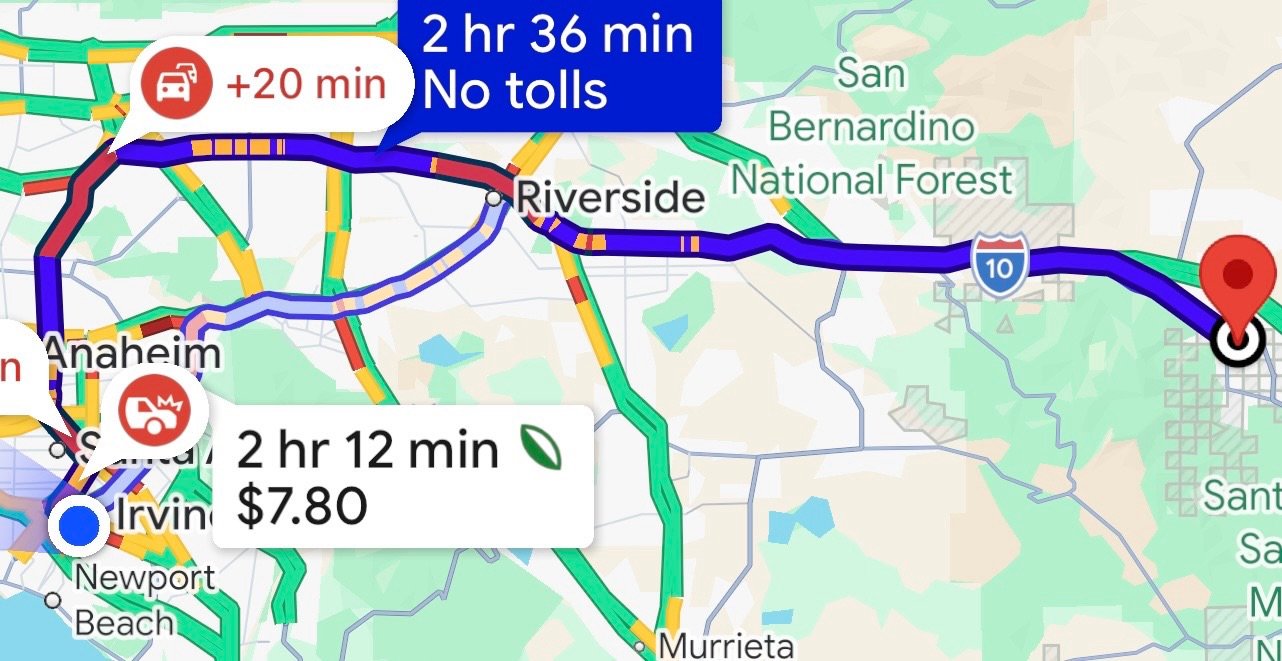
I’ve recently taken a job that has turned my Fisker Ocean from a stylish weekend cruiser into a high-stakes endurance machine. My daily trek requires driving almost 100 miles each way—a 200-mile round trip from Palm Springs to Irvine.
When I pull back into my driveway in the Coachella Valley, the reality of the 32A limit hits home. After a long day of meetings and traffic, I often only have about an 8-hour window to plug in before I have to head back out. At 32 Amps, that 8-hour window is only enough to bring the Hyper Range battery back to about 77%, or roughly 230 miles of indicated range.
On paper, 230 miles should easily cover a 200-mile trip. In reality, the “EV Tax” is real. By the time I navigate the climb out of the basin and fight the headwinds on the I-10, I’m getting home with only 30 to 35 miles to spare. That’s with me being a “drafting ninja,” tucking behind high-profile vehicles and keeping my speed strictly between 65-70 mph whenever the traffic actually opens up. It’s a tightrope walk that makes you intimately familiar with every percentage point on that dashboard.
The Science of the “Slower” AC Charge
So, why did Fisker cap the AC charging at 32 Amps? The answer lies in the chemistry and the hardware. The Ocean’s Hyper Range battery uses a Nickel Manganese Cobalt (NMC) composition. While NMC is fantastic for energy density (which is how the Ocean gets that massive 360-mile EPA range), it is sensitive to heat and voltage during the AC-to-DC conversion process.
When you charge at home on a 50-amp circuit, your car’s onboard charger has to convert that Alternating Current (AC) from your house into Direct Current (DC) for the battery. By limiting this to 32 Amps, Fisker likely prioritized the longevity of the onboard power electronics and reduced thermal stress on the pack. It’s a conservative play—choosing battery health over raw home-charging speed.
DC Fast Charging: The Ocean’s Secret Weapon
However, the “32A bottleneck” only exists at home. When you pull up to a DC Fast Charger (DCFC), the onboard converter is bypassed entirely. The “wide open” nature of the Ocean’s DC charging is where the car truly shines.
I’ve watched my Ocean pull a steady 150 kW at Electrify America stations, and more importantly, it maintains that speed deep into the charging session. This is a massive contrast to cars like the Polestar 2. In many real-world tests, the Polestar might hit that 150 kW peak for the first two minutes, but then it begins a precipitous “taper,” dropping almost 1 kW of charging speed every minute as the battery heats up. The Fisker’s thermal management allows it to soak up those kilowatts with a much flatter curve, making it one of the most efficient road-trippers on the market today.
The Brutal Truth of Speed and Aero
The reason my 200-mile commute feels so precarious is due to the physics of high-speed travel. Electric cars consume energy at an exponentially higher rate as speeds increase. In a typical EV, you lose almost 10% of your range for every 10 mph you increase your speed above 55 mph.
The “sweet spot” for EV efficiency is surprisingly low—usually around 45 mph. At this speed, aerodynamic drag (which increases with the square of your velocity) is minimal, and the motors are spinning in their most efficient band.
This was famously demonstrated by a 20245 endurance test of a Polestar 2. While its EPA range was stated at 438 miles, the drive managed to zoom past that number and set a Guinness World Record and put an amazing 581 miles on the odometer. But wait, there’s more: they did so by maintaining a steady 45 mph for almost 23 hours. It proves that the “range” on your window sticker is a suggestion, not a promise.
Conclusion
Living with the 32A limit has taught me that the Fisker Ocean isn’t a “set it and forget it” appliance; it’s a machine that rewards a driver who understands its rhythm. While I wish I could pull 48 Amps to give myself a 100% buffer every morning, the trade-off is a battery that stays cool and a DC charging curve that puts most luxury brands to shame.
If you see an Ocean drafting a semi-truck on the I-10 at 10:00 PM, give me a wave. I’m just playing the efficiency game—and so far, I’m winning.