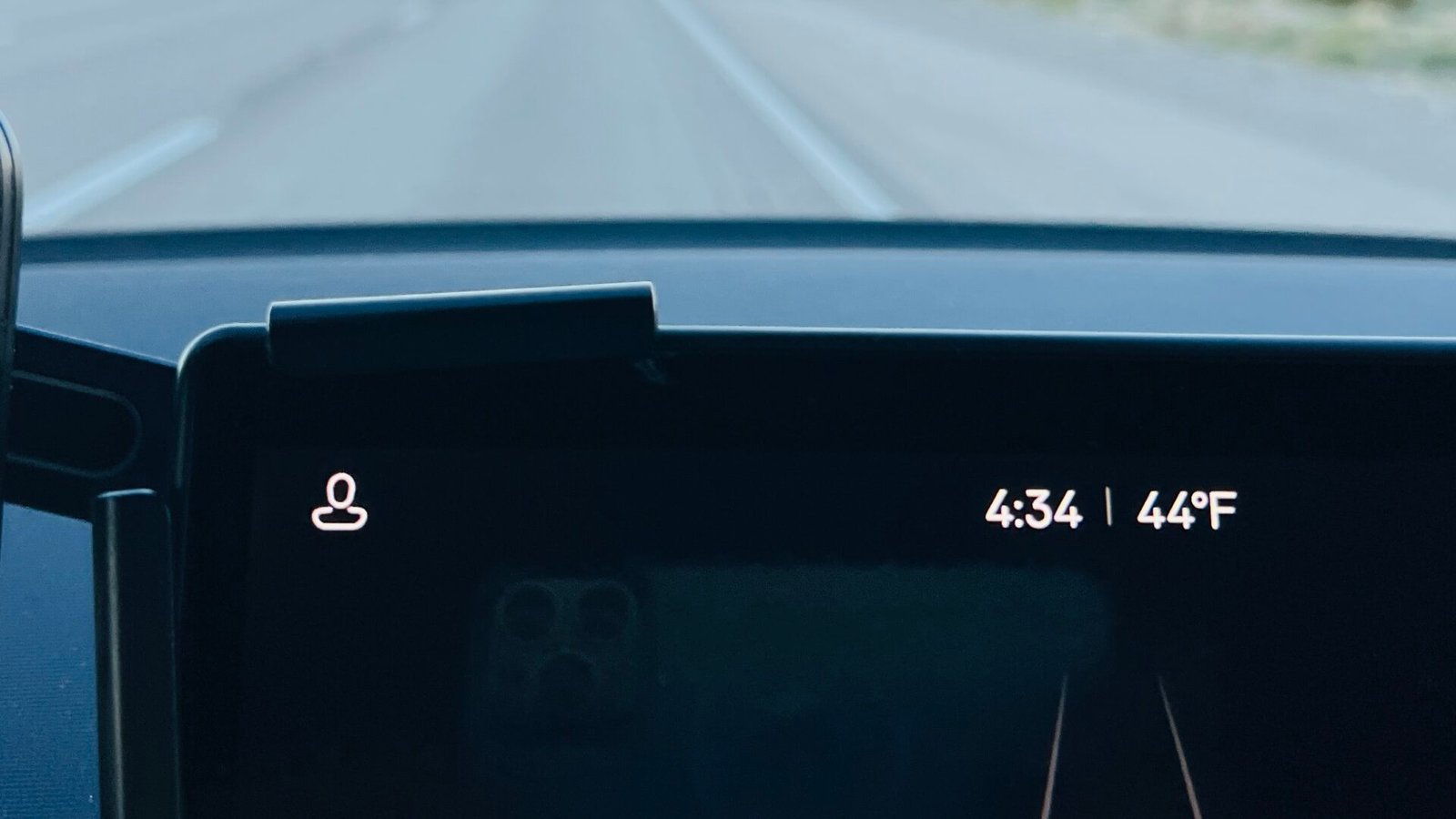

The Mojave Desert is a land of deceptive distances and shifting temperaments, a reality that becomes starkly apparent when you trade the modern interstate for the ghost-town charm of Route 66. Setting out from Palm Springs, the morning air felt crisp but manageable, yet as the elevation climbed and the sun retreated behind a thin veil of high-desert clouds, the thermometer plummeted. By the time the Fisker Ocean rolled through the hollowed-out remains of Amboy, the ambient temperature had dipped below 45 degrees, and the digital readout on the dash began to tell a story of thermal physics that no driver wants to read in the middle of a wasteland: You do not have enough range to make it!
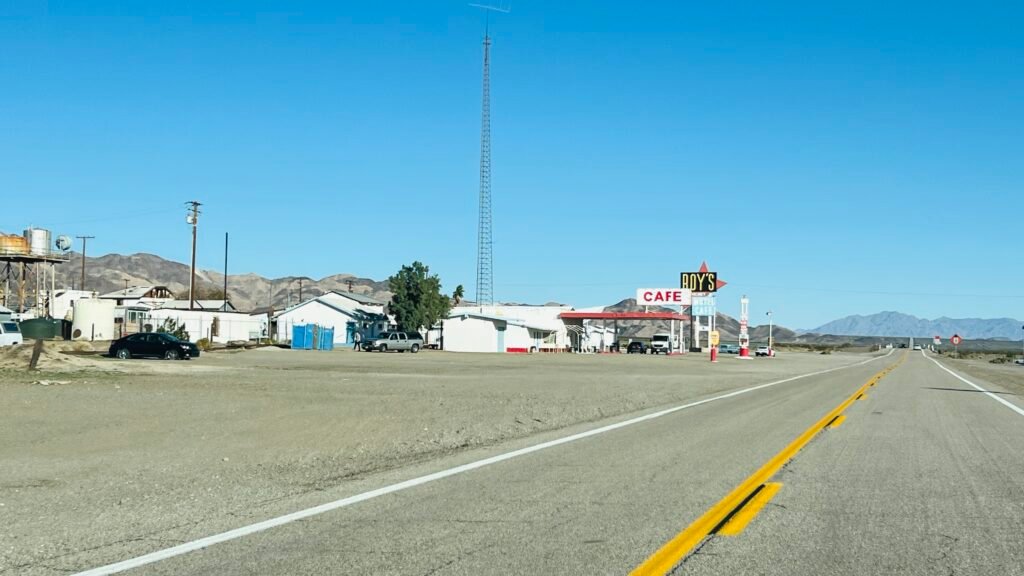
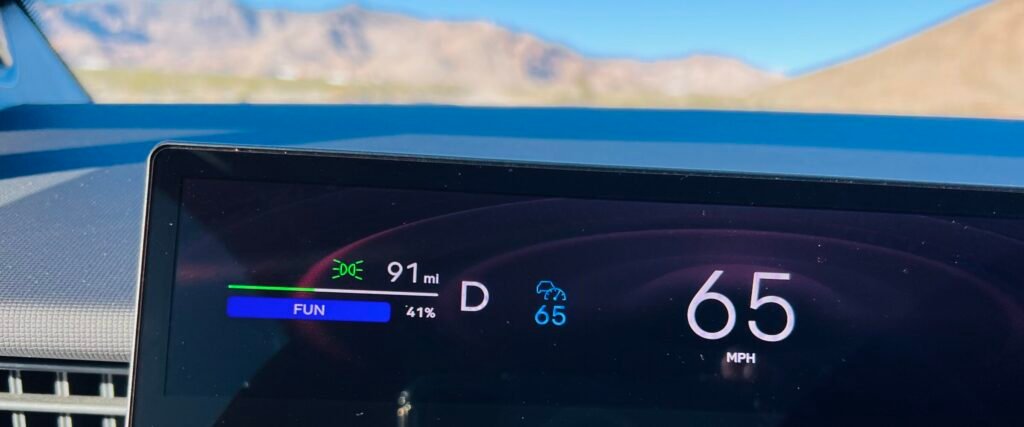
Electric vehicle range is a fickle thing, governed by the stubborn laws of thermodynamics. When the mercury drops below that 45-degree threshold, the lithium-ion battery enters a state of internal resistance, struggling to move ions through a chilled electrolyte. Compounding this is the relentless tax of the cabin heater, which, unlike an internal combustion engine that uses wasted thermal energy, must draw directly from the high-voltage pack to keep the passengers from freezing. We zoomed past the iconic mid-century design of Roy’s Motel, the signage played an especially ironic note: The design is classic space-age theme of the early 60’s, a time where electric cars would rule the future. And now, here I am in my electric car, scared shitless that I may not have enough range to make it to the next charging station, let alone all the way to Vegas! The car showed 91 miles of estimated range remaining, and the navigation confirmed that the Electrify America chargers in Primm, Nevada, were exactly 75 miles away.
In the desert, a one-to-one ratio of range to distance is effectively a zero-percent margin for error. The climb from the basin of Amboy toward the Ivanpah Valley involves significant elevation gains, and in the biting 42-degree air, every foot of ascent felt like it was clawing miles away from the battery. The “projected” range is a rolling average based on ideal conditions, but cold air is denser, creating more aerodynamic drag, and the battery management system was working overtime just to keep the pack at an operational temperature. We were forced into a game of hypermiling chess, watching the 15-mile buffer slowly erode as the road tilted upward and the wind began to howl across the Kelso Dunes.
There is a specific kind of silence that settles in a cabin when you realize you are at the mercy of the elements. We doused the climate control, relying on our long sleeved shirts to fend off the chill. I locked the cruise control at 65, a conservative pace to minimize the impact of the cold, thick air. Every mile markers felt like a heartbeat. The distance to Primm began to shrink, but the range dropped at a slightly faster clip, a haunting reminder that cold weather is the ultimate range thief. It turns a confident journey into a tense calculation of kilowatt-hours versus elevated mountain passes.
As the lights of the Primm casinos finally flickered on the horizon like a neon oasis, the car was deep into its reserve power. We had survived the cold-weather gauntlet of the Mojave, but the lesson was etched into the trip log. Below 45 degrees, the desert doesn’t just get cold; it gets hungry for your range, proving that on the long stretch of Highway 66, the most important tool isn’t just a map, but a deep respect for the thermometer.
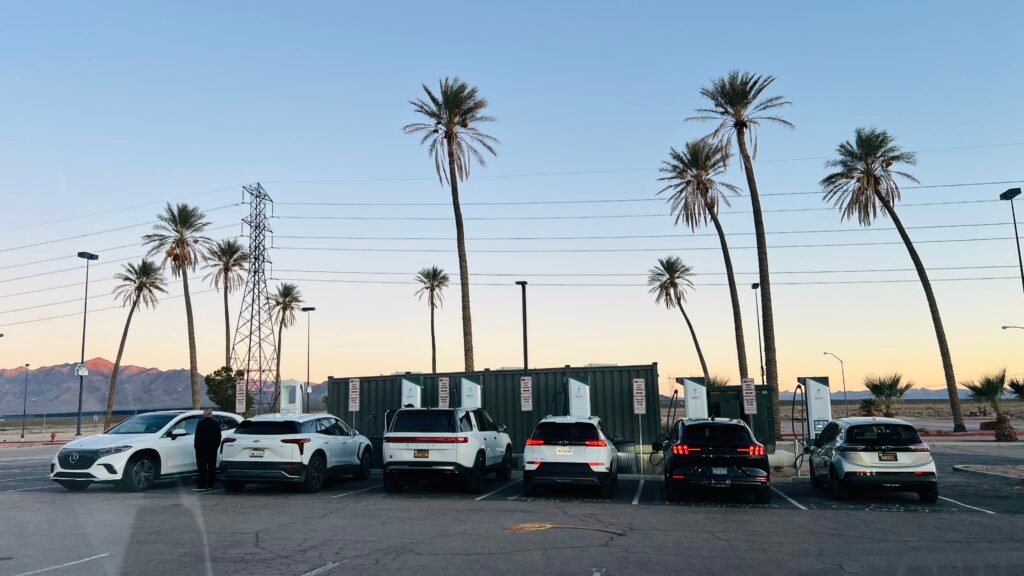
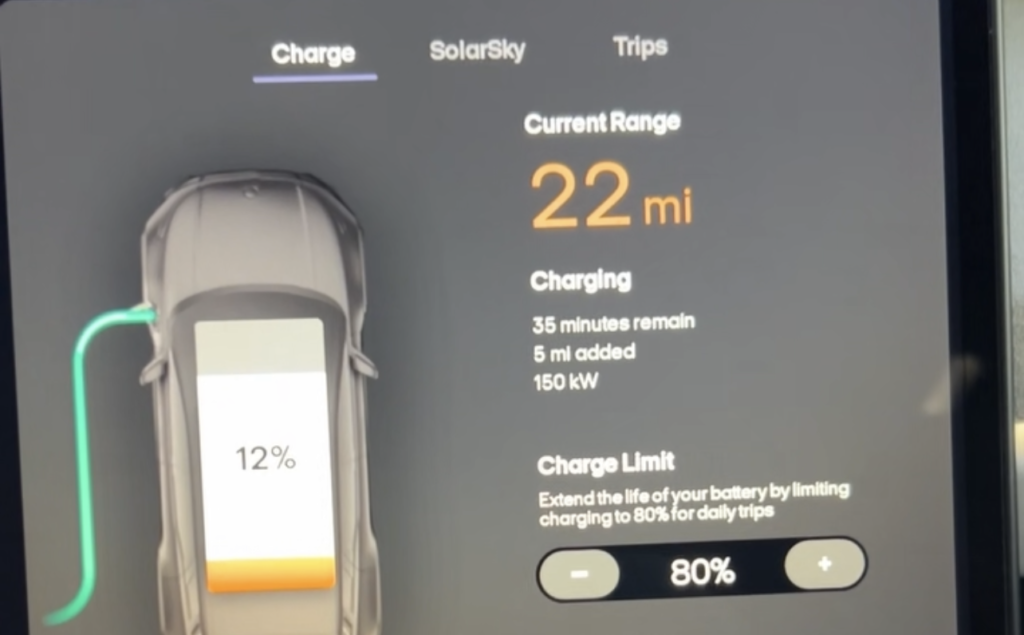
We pulled up to the Electrify America chargers…and you gotta be kidding me! WTF!!! In the middle of nowhere, with only 17 miles remaining, all chargers are full! FFUUCCKK! Relax, it’s ok…namaste. OK, so not so bad, just as I cooled down, a car pulls out and we are able to start charging. What is interesting, is that people know that cold and hot weather suck the juice from the battery, but no one seems to be able to put their finger on exactly what percentage of range is lost at what temperatures. In the summer time, we can make the 230 drive and arrive in Vegas with about 30-40 miles remaining, for a 270 mile stretch. Not bad considering the hills we climb traversing the various valley floors and mountain passes. And just a 10% knock on the normal 300+ miles I get driving high speed across the flat lands of Riverside to LA County.
But in the winter time, when temps are closer to freezing versus temps requiring frozen cocktails, the range drops dramatically, reaching 180 miles with just 17 miles or so remaining. Just barely 200 miles total range. That’s frightening close to the limit of not making it and being stranded.
So for the next trip in winter with frigid temps, I think the remedy will be to stop at the Rivian Charging Outpost in Joshua Tree, about 45 miles from our house. If I’m able to completely charge up there, in theory, I could make it all the way to Vegas. And then that begs another EV question: Is it better range-wise, to draft a faster car, or drive through cold at a slower speed. People on their way along 29 Palms Highway, leading to Amboy, always seem to drive at 68-mph. If I stay in their draft, reducing my wind resistance, and possibly picking up some heat as well, will increase range better than staying in the slow lane at 65-mph. Looks like another experiment is on the books for next years winter getaway.